
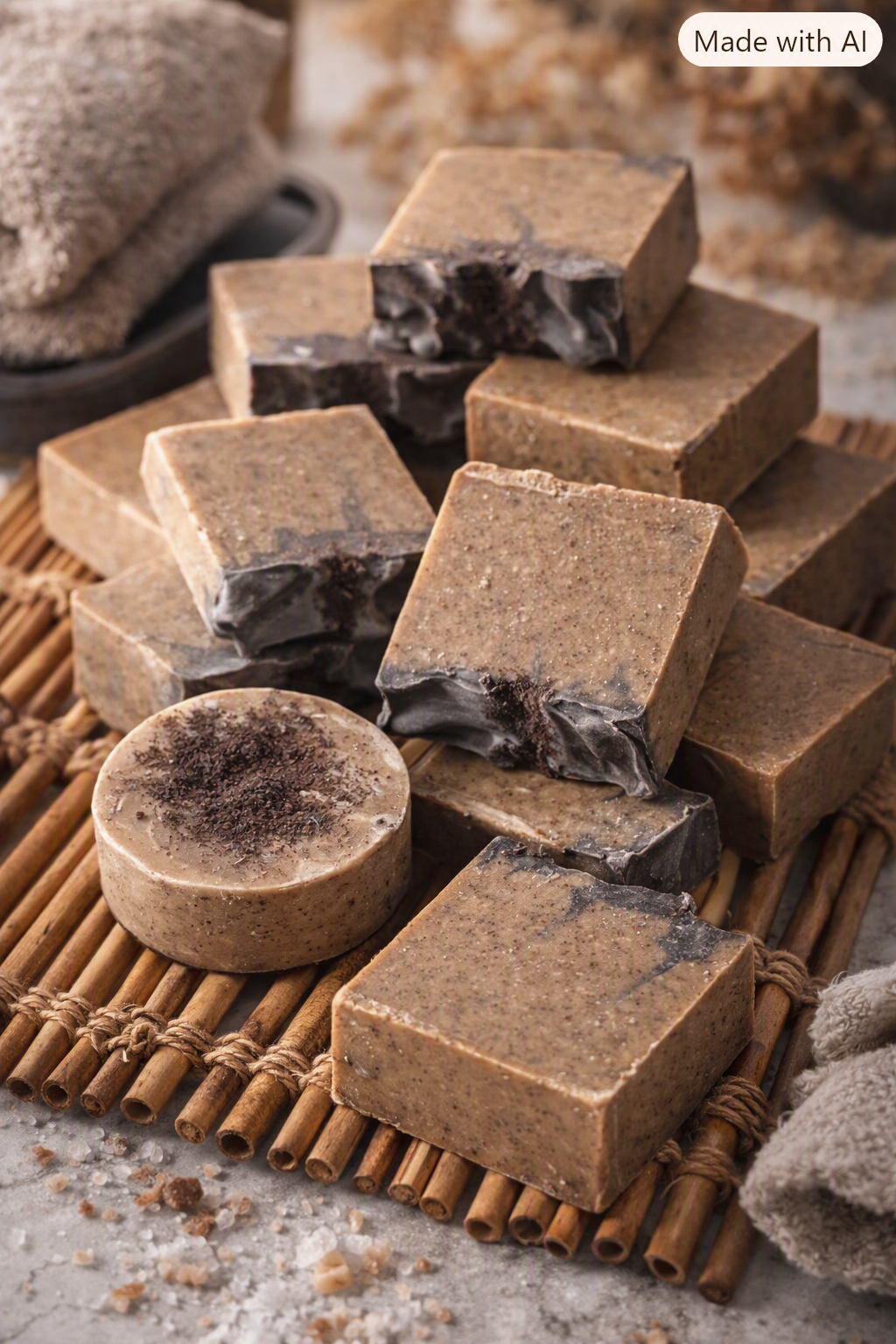
The Hostile Environment That Heals
Not everything dies in the lye. Here's the science of what survives — and why it still benefits your skin.
"Everything gets destroyed in soap. The lye kills it all. High pH is hostile. Nothing survives."
I hear some version of this in almost every soapmaking forum, comment thread, and customer question I encounter. And I understand where it comes from — saponification is a powerful, exothermic chemical reaction involving a caustic alkali at a pH that can hit 12 or higher. That sounds like scorched earth. But chemistry does not work in absolutes, and the idea that a high-pH environment destroys all compounds equally is a significant oversimplification of what is actually happening inside that batter.
Some things are destroyed. I will tell you exactly which ones, and I will not dress it up. But some things survive — not accidentally, not wishfully — but because of their molecular structure, their solubility, and their position in the reaction chemistry. And the formulator who understands which is which can design a bar that genuinely delivers beyond just cleaning your hands.
Section 1 — What Saponification Actually Does
Saponification is base-catalyzed ester hydrolysis. When fats or oils — which are triglycerides, meaning three fatty acid chains attached to a glycerol backbone — react with sodium hydroxide (NaOH), the hydroxide ion cleaves the ester bonds holding those fatty acid chains together. Each freed fatty acid combines with a sodium ion to form a fatty acid salt. That fatty acid salt is soap. The glycerol backbone is released as a free molecule — glycerin — as a natural byproduct of the reaction.
Here is the point that matters most and gets misunderstood constantly: the lye is a reactant, not an ingredient. In a properly formulated bar, the sodium hydroxide is fully consumed by the reaction. There is no free lye remaining in the finished product. The hostile, caustic phase — the phase where the chemistry is genuinely doing damage to sensitive compounds — is the active saponification window, not the finished bar sitting in your dish.
pH by stage:
Active saponification batter: pH 12–14
Freshly unmolded bar: pH ~10–11
Fully cured bar (4–6 weeks): pH 9–10
Commercial syndet bars: pH 5.5–7 (these are not true soap)
That pH of 9–10 in the finished bar is still alkaline — measurably higher than skin's natural pH of approximately 5.4 to 5.9. Skin's acid mantle will buffer this difference within minutes of rinsing. For most people, this is not an issue. For those with compromised barrier function, it can be — which is a formulation conversation for another post. What it is not is a sign that the bar is "full of lye." The lye is gone. It became soap.
This is the section most people have not thought through. The same alkalinity that intimidates people is also doing something fundamentally useful — in two distinct ways.
1. Antimicrobial Environment During Saponification
During active saponification, the batter is at pH 12–14. Bacteria cannot survive above approximately pH 9–10. Mold requires a water activity (Aw) above 0.85 to establish growth. A properly cured bar of cold process soap has a water activity in the range of 0.5–0.6 — well below that threshold. The "breeding ground for bacteria" concern that circulates around bar soap is not supported by the microbiology. Studies have confirmed that even deliberately contaminated bar soaps do not transfer significant pathogen loads to subsequent users because the alkaline, low-moisture environment is inherently self-cleansing.
2. Protective Alkalinity for the Soap Matrix
The high pH also stabilizes the fatty acid salt matrix itself. It slows certain oxidative breakdown pathways during the cure window. It is part of why properly formulated cold process soap does not require a synthetic preservative system — the chemistry of the bar is the preservation mechanism. The water activity is too low for microbial survival, and the pH inhibits the enzymatic pathways that drive spoilage in water-based products like lotions and creams.
A properly formulated cold process bar is designed with a 5–8% lye discount — meaning there is slightly less NaOH than would be required to saponify every molecule of oil. That intentional excess of unsaponified oil remains free in the bar and is a primary vehicle for conditioning benefits. derstanding this duality — that alkalinity both disrupts certain compounds AND protects the finished product — is foundational to thinking clearly about formulation. You are not fighting the chemistry. You are working within it.
Section 3 — What Actually Gets Destroyed (Honestly)
I am not going to hedge this section. There are compounds that do not survive saponification, and making marketing claims around them would not be accurate. Here is what is gone:
- Active enzymes: Denatured by alkalinity above pH 8. This applies to fresh milk, powdered milk, botanical infusions, aloe vera gel — any enzyme-active ingredient. Gone. Not a debate.
- Probiotics and live cultures: Cannot survive at pH 12–14. Zero viability post-saponification. Probiotic soap is not a meaningful claim from a chemistry standpoint. Note: I use melt and pour method when making my feminine pH balance soaps for pre and pro biotics to affective.
- Water-soluble vitamins — Vitamin C (L-Ascorbic Acid), free B vitamins: Highly pH-sensitive and largely degraded in the alkaline batter. If you are soaping with orange peel powder for Vitamin C content, that vitamin is not surviving.
- Anthocyanins (purples, pinks, blues from lavender, butterfly pea flower, rose, hibiscus): These pigments are pH indicators. They shift color dramatically at high pH — usually turning brown, green, or gray. Most are destroyed or rendered visually unrecognizable.
- Chlorophyll: Degrades at high pH. The bright green from fresh nettle infusion or spinach will brown out in cure. It is beautiful going in and humbling coming out.
- Delicate volatile aromatic compounds from fresh florals: The top notes from fresh lavender buds, rose petals, or chamomile — largely lost during the heat and alkalinity of saponification.
I do not make enzyme-active claims, probiotic claims (only in melt and pour), or Vitamin C claims for my bars. That would not be honest formulation science. What I do is work with ingredients whose beneficial compounds do survive — and there are more of them than the skeptics acknowledge.
Section 4 — What Actually Survives: The Science
This is where it gets genuinely interesting. These compounds are documented to survive or partially survive saponification — and they contribute real, demonstrable skin benefits in the finished bar. Every ingredient in a well-formulated bar is chosen for what it actually delivers — not what sounds good on a label.
Glycerin (Glycerol)
Glycerin is not an additive in cold process soap — it is a product of the saponification reaction itself. Every properly made CP bar naturally contains glycerin. It is a powerful humectant, meaning it draws moisture from the environment into the upper layers of the skin. Commercial soap manufacturers routinely extract glycerin from their soap and sell it separately for use in other cosmetic products. When you use handmade CP soap, that glycerin stays in the bar — and you feel the difference immediately on your skin.
Beta-Carotene (from Carrot, Pumpkin)
Beta-carotene is a fat-soluble carotenoid — it bonds into the oil phase before and during saponification. It is one of the most well-documented stable natural colorants in cold process soap, retaining its characteristic warm orange/gold color through a full cure. On the skin, beta-carotene acts as an antioxidant and serves as a precursor to Vitamin A (retinol). It is alkaline-stable within the soap matrix in a way that water-soluble pigments simply are not — the chemistry of its solubility is what saves it.
Polysaccharides (from Aloe Vera, Oatmeal)
Long-chain sugar polymers are chemically more stable at high pH than simple sugars. Beta-glucan from colloidal oatmeal partially survives saponification and contributes to documented skin-soothing and barrier-support properties — which is why colloidal oatmeal soap has a track record that extends well beyond marketing. The FDA recognizes colloidal oatmeal as a skin protectant active ingredient for good reason. Aloe polysaccharides, including acemannan and related compounds, also partially survive and contribute to the characteristic slip and soothing feel of aloe-containing soap.
Polyphenols and Antioxidants
Polyphenols from green tea, rosemary, and calendula — when infused into the oil phase rather than added as water-phase components — show partial survival through saponification. Ferulic acid, an alkali-stable antioxidant found in several botanicals, survives particularly well when formulated correctly. Tannins from certain botanicals also survive in part, contributing mild astringency. The key word throughout this category is "partially" — but partially is not zero, and partial antioxidant activity in a rinse-off product is still meaningful.
Fatty Acids — The Foundational Benefit
This is the biggest skin benefit story in soap, and it is often overlooked because it sounds less exotic than botanical additives. The fatty acid profile of the oils in your bar directly determines lather quality, conditioning feel, cleansing strength, and skin compatibility. Different oils contribute distinct fatty acid profiles that survive saponification because saponification is what converts them into soap molecules:
- Lauric and Myristic acids (Coconut, Palm Kernel Oil): Drive cleansing efficacy and fluffy lather production
- Oleic acid (Olive, Avocado, Sweet Almond): Deep conditioning, skin barrier support, long-lasting moisture
- Linoleic acid (Rosehip, Hemp Seed, Sunflower): Skin barrier repair — particularly well-studied for acne-prone and dry skin types
- Stearic and Palmitic acids (Shea Butter, Cocoa Butter): Bar hardness, creamy lather, protective skin feel
The superfatted oils — the 5–8% that remain unreacted — deliver these fatty acids directly to skin during the wash. This is the primary conditioning mechanism of a well-formulated handmade bar.
Fat-Soluble Vitamins (A, D, E from Avocado, Carrot)
Fat-soluble vitamins survive saponification significantly better than their water-soluble counterparts because they are anchored in the oil phase. Vitamin E (tocopherol) is particularly stable — it functions as an antioxidant in the bar and on the skin, and it extends shelf life by protecting unsaponified oils from rancidity. Vitamins A and D from avocado and carrot carry into the finished bar and are released on contact with skin during washing.
Minerals (from Milk, Clay)
Minerals are elemental compounds — zinc, selenium, magnesium, calcium. They do not denature. They survive the alkaline process largely intact. Zinc has documented skin-soothing and sebum-regulating properties. Kaolin clay retains its physical structure and gentle oil-absorption function through saponification. These are not glamorous ingredients, but they are reliably present in the finished bar.
Silk Proteins and Amino Acids (Partial)
Silk amino acids added at thin trace or cool-down survive partially. Some amino acid chains are stable enough in the alkaline environment — particularly when kept at lower processing temperatures — to persist into the finished bar. Their primary contribution is tactile: a characteristic silky, conditioning lather feel that experienced users identify immediately.
Compound Survival at a Glance
| Compound | Source | Survives Saponification? | Skin Benefit |
|---|---|---|---|
| Glycerin | All CP soap (produced by reaction) | ✔ Fully | Humectant, moisture retention |
| Beta-Carotene | Carrot, Pumpkin | ✔ Highly stable | Antioxidant, Vitamin A precursor, stable color |
| Polysaccharides | Aloe vera, Oatmeal | ✔ Partially | Soothing, barrier support, slip |
| Polyphenols | Green tea, Rosemary, Calendula (oil-infused) | ✔ Partially | Antioxidant, anti-inflammatory |
| Fat-soluble Vitamins (A, D, E) | Avocado, Carrot | ✔ Partially | Skin conditioning, antioxidant |
| Fatty Acid Salts | All oils | ✔ Fully (they ARE the soap) | Cleansing, conditioning, skin barrier |
| Superfatted Oils | Olive, Shea, Avocado, Rosehip | ✔ Fully (unreacted) | Direct conditioning on skin contact |
| Minerals | Milk, Clay | ✔ Largely intact | Soothing, sebum regulation, absorption |
| Silk Amino Acids | Silk protein (added at trace) | ✔ Partially | Silky lather feel, skin conditioning |
| Active Enzymes | All sources | ✘ Destroyed | None in finished bar |
| Probiotics / Live Cultures | Milk, kefir | ✘ Destroyed | None in finished bar |
| Anthocyanins | Lavender, Rose, Butterfly Pea Flower | ✘ Mostly destroyed | Color only — unstable at high pH |
| Vitamin C (L-Ascorbic Acid) | Citrus, Rose Hip | ✘ Destroyed | None in finished bar |
| Chlorophyll | Nettle, Spinach, Green botanicals | ✘ Degrades | Color only — browns during cure |
Section 5 — The Role of Technique: Why Process Matters
Chemistry determines what can survive — technique determines how much actually does. Soaping cool, water discounting, the freeze method, adding at thin trace, and superfatting at 5–8% are not stylistic choices; they are deliberate preservation decisions, each protecting something specific in the finished bar.
"Technique is not a workaround. It is formulation strategy. Every decision in my process exists to preserve something specific in the final bar."
Section 6 — The Rancidity Question: What Actually Threatens a Botanical Bar
Since we are being precise about chemistry, let's separate the three things that can go wrong with a finished bar — because they are frequently conflated, and conflating them leads to the wrong solutions.
Oxidative Rancidity (DOS — Dreaded Orange Spots)
The most common quality issue in high-linoleic bars (rosehip, hemp seed, sunflower). This is oxidative rancidity of the unsaponified oils — a chemical process driven by exposure to air, light, and heat over time. It has nothing to do with bacteria, and it is not botanical decomposition. The orange spots are oxidized fatty acids. Prevention: Vitamin E (tocopherol) and Rosemary Antioxidant Extract (ROE) in the oil phase, opaque and airtight packaging, water discount, and a balanced oil selection that does not rely too heavily on high-linoleic oils without adequate antioxidant support.
Actual Mold
This is rare in properly formulated bars, but it does occur — almost exclusively when water activity is too high. Improperly cured bars, excess water in the formula, or fresh botanical additions that introduce moisture without accounting for it in the water discount. Prevention: full cure (six to eight weeks minimum for standard bars; three to six months for high-botanical-content bars), proper water discount, and keeping fresh additives to a minimum unless you are accounting for their moisture content.
Microbial Spoilage
This is the concern that drives people toward preservatives in soap — and it is largely misplaced. The combination of low water activity and high pH makes bar soap an inhospitable environment for microbial survival. This is fundamentally different from a lotion, serum, or water-based product, which genuinely does require a preservative system. Soap is self-preserving by its chemical nature.
Rancidity, mold, and microbial growth are three different processes with three different causes and three different solutions. Knowing which you are dealing with — or preventing — determines everything about your response.
Section 7 — What This Means for Your Skin
Glycerin is a natural byproduct of saponification — every CP bar produces it and retains it in full. Commercial producers extract it because it is a profitable commodity, then compensate with synthetic humectants and conditioning agents engineered back into the formula. What you get in artisan CP soap is not a reconstructed product — it is the real thing, exactly as the chemistry produced it, with superfatted oils delivering contact conditioning at the moment of wash and beta-carotene acting as a rinse-off antioxidant during skin contact.
"People expect soap to work like a serum. It doesn't — and it doesn't need to. What a well-formulated bar delivers is cleansing that doesn't strip, conditioning that doesn't leave residue, and a skin feel that tells you immediately the formula is working."
The polysaccharides from aloe and oatmeal contribute real, documented barrier-supporting properties — even in an alkaline matrix — which is precisely why colloidal oatmeal holds FDA recognition as a skin protectant active ingredient. And the fatty acid profile of the oil blend is the foundational benefit that carries through 100% intact in every bar, because the fatty acid salts are the soap itself. You cannot separate the benefit from the product.
Closing
The hostile environment of saponification is real. High pH, alkalinity, heat — these are powerful forces, and I am not here to minimize them. But they are not indiscriminate. The chemistry favors certain compounds by structure, by solubility, by phase behavior. A formulator who understands which compounds those are — and who designs their process specifically around preserving them — creates a bar that genuinely does more than clean. The fear that "lye destroys everything" discourages rigorous experimentation and flattens what is actually a rich, nuanced area of cosmetic science. The truth is more interesting: some things survive, and they survive because of the chemistry, not in spite of it.
At Sabbie Selections, every ingredient is chosen with intention. Every technique is applied with purpose. And every batch is tested long enough to know — not assumed — that what goes in is still working in the finished bar. That is not marketing language. It is how I was taught to think about formulation, and it is how I intend to keep working.
Want to know exactly what's in your bar? Every Sabbie Selections soap comes with full ingredient transparency.
Shop the collection at sabbieselections.com

Comments (0)